

When competitors in Lithuania are constantly looking for ways to attract more customers online, design increasingly ends up at the centre of important business decisions. A well-thought-out visual solution can determine how users will see and judge your company. In this article you will find out what sets apart a professional designer and which skills determine successful online communication that helps strengthen the company's visibility and the user experience.
Content Management
- What a professional designer is and their skills
- Types of designers: UI/UX, graphic, interior
- The creative process: from idea to implementation
- The value of design for business and the user
- The main mistakes when hiring a designer
Key conclusions
| Point | Details |
|---|---|
| A professional designer's skills | A designer has the ability to combine creativity, technical skills and strategic thinking to meet business needs. |
| Variety of specialisations | Different design fields, such as graphic, UI/UX and interior design, require specific knowledge and skills. |
| The creative process | Using structured methodologies, designers can generate, analyse and implement innovative ideas. |
| The value of design for business | Effective design can increase competitiveness, improve the user experience and shape a strong brand. |
What a professional designer is and their skills
A professional designer is a visual communicator who transforms abstract ideas into attractive, functional and strategically prepared visual content. This specialist is much more than a simple graphics creator – they are a creative professional capable of understanding business needs and expressing them through visual language.
The main skills of a professional designer include:
- Technical abilities to work with specialised design software such as professional design tools
- Creativity in solving visual communication challenges
- The ability to understand clients' business goals
- Strategic thinking when creating visual solutions
- The ability to combine aesthetics and functionality
Professional designers usually have a formal higher education in graphic design, which provides a deep theoretical and practical knowledge base. Their work requires continuous learning, as design technologies and trends change rapidly.
Professional tip: When choosing a designer, always evaluate their portfolio and ability to understand the specifics of your business, not just their technical skills.
Types of designers: UI/UX, graphic, interior
Every design professional has a unique specialisation that requires specific skills and an approach. Different design fields have their own distinctive goals and methods, although they are all united by creativity and functionality.
Graphic design is the art of visual communication, which includes:
- Creating logos
- Designing advertising materials
- Preparing print and digital graphics
- Shaping a visual identity
UI/UX design focuses on the user experience of digital products, including:
- Designing interfaces
- Optimising the user's navigation path
- Creating interactive elements
- Combining functionality and aesthetics
Interior design is a complex discipline requiring deep knowledge of architecture and psychology. It includes space planning, selecting materials and colours, lighting design and creating functional and aesthetically attractive environments.
Professional tip: When choosing a designer, always pay attention to their specialisation and previous projects, as each design field requires specific competences.
The table below compares the three main designer specialisations by their field, typical commissions and the most necessary knowledge.
| Design field | Most common commission | Required competences |
|---|---|---|
| Graphic design | Creating a corporate identity | Typography, colour theory |
| UI/UX design | App interface mockups | User experience analysis |
| Interior design | Commercial space planning | Architecture, ergonomics |
The creative process: from idea to implementation
The creative process is a complex, multi-phase journey in which original ideas are transformed into real solutions. Creativity methodologies offer various ways to generate and realise innovative ideas in business, art and technology.
The main stages of the creative process:
- Idea generation: open and unrestricted thinking
- Selection: identifying the most promising solutions
- Refinement: detailing the chosen idea
- Realisation: practical implementation
- Evaluation: final analysis of the result
Brainstorming is one of the most popular creative techniques, allowing a group to generate as many original ideas as possible without criticism or restrictions. This method encourages non-standard thinking and opens new perspectives in problem solving.
A successful creative process requires continuous learning, openness to new ideas and the ability to take risks.
Professional tip: Document all ideas during the creative process, even those that at first glance seem unfeasible – sometimes they can become the most valuable.
The value of design for business and the user
Design in modern business is much more than a simple visual solution. Design as a tool for innovation can give organisations a significant competitive advantage by transforming traditional business strategies.
The main values of design for business:
- Creating a competitive advantage
- Improving the user experience
- Shaping the company's image
- Increasing productivity
- Generating innovative solutions
For the user, design is becoming an increasingly important decision-making criterion. Modern users value not only a product's function but also its aesthetics, convenience and emotional value. Design becomes a means of communication that speaks of the company's values, professionalism and attention to detail.
Professional design is a silent salesperson that speaks without words and convinces even before the first contact.
Professional tip: Investments in quality design will always pay off in greater user trust and loyalty.
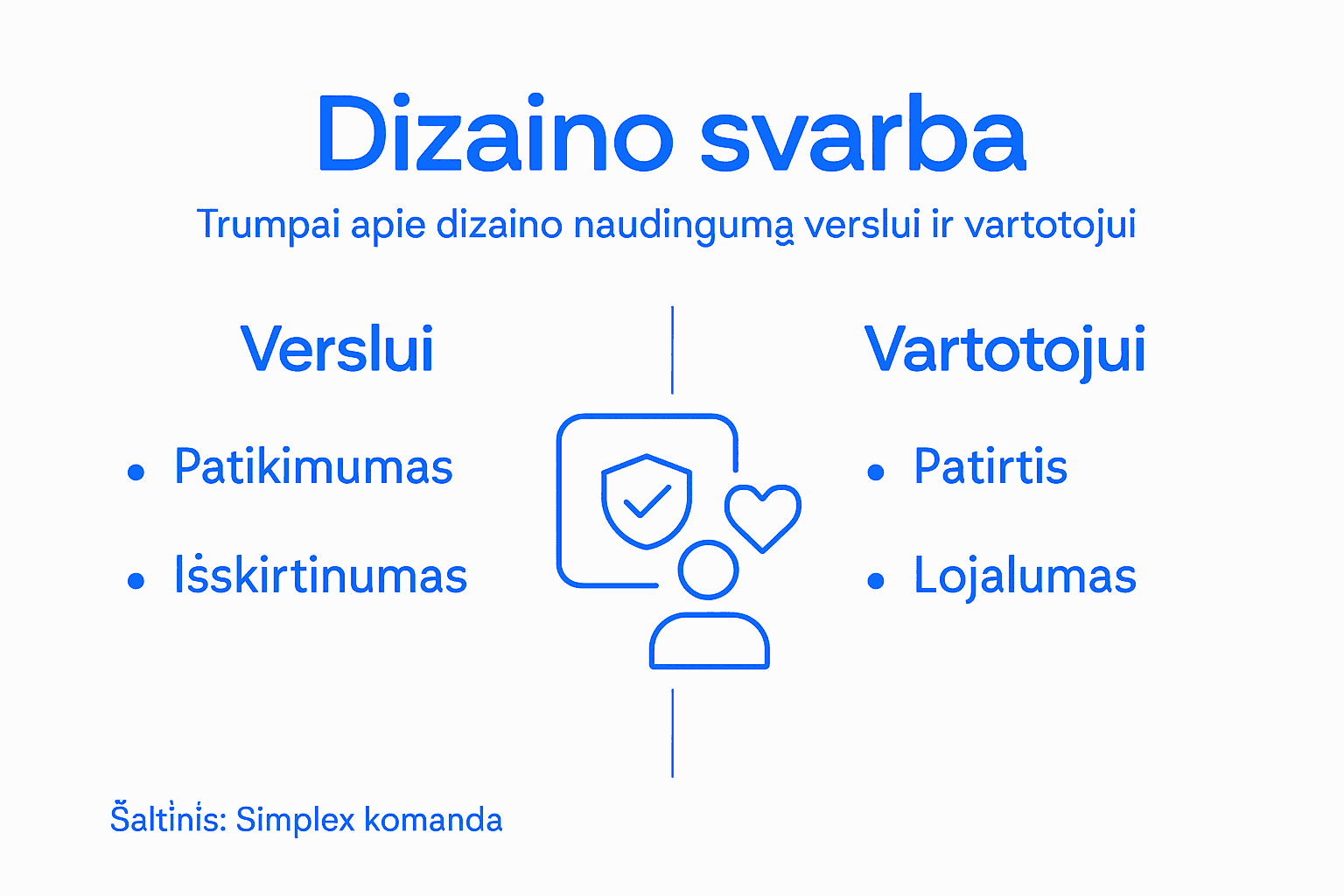
The table below will help assess how design affects different aspects of business and the user.
| Aspect | Impact of design on business | Impact of design on the user |
|---|---|---|
| Competitiveness | Encourages innovation and differentiation | Provides a clear criterion for choice |
| Image | Shapes a professional face for the company | Creates an emotional connection with the brand |
| Ease of use | Increases productivity | Improves the everyday usage experience |
The main mistakes when hiring a designer
The most common design project mistakes can lead to unsatisfactory results and unnecessary organisational losses. Business managers often make mistakes even before they start working with a designer.
The main mistakes when hiring a designer:
- Unclear and undefined project goals
- A too narrow or too broad technical brief
- Setting inadequate expectations
- Insufficient attention to the designer's portfolio
- Lack of communication during the project
- Ignoring creativity and specialisation
Each of these mistakes carries serious consequences. Unclear goals can lead the project in a completely different direction, and a lack of communication creates constant tension between the client and the contractor.
A good design project starts with a clear vision and mutual understanding.
Professional tip: Before starting a project, create a detailed technical brief that clearly states the expectations, budget and final deliverables.
Professional design for business success – not just for beauty
For a business seeking to stand out in a competitive market, it is very important to invest in professional design solutions that help create a clear user experience and a strong company image. The article draws attention to the most common mistakes when choosing designers, so it is essential to have a reliable partner who understands both the importance of creativity and the strategic business goals
Give your business a chance to grow by using Simplex the competence of a team of professional IT and digital solutions. Our UI/UX design solutions combine functionality and aesthetics, and we also ensure flawless website and e-shop development focused on user needs
Make sure that your business's design not only reflects professionalism but also effectively contributes to business growth. Contact us today and find out how Simplex can help realise your vision – don't miss the opportunity to take advantage of modern digital solutions
Frequently asked questions
What is a professional designer?
A professional designer is a visual communicator who transforms ideas into attractive and functional visual content, capable of understanding business needs and expressing them through design.
What are the main skills of professional designers?
The main skills include technical abilities to work with design software, creativity, strategic thinking and the ability to combine aesthetics with functionality.
How can design improve the user experience?
Professional design improves the user experience by creating attractive, functional and intuitive interfaces that make it easier to navigate a product or service.
What should be considered when choosing a designer for a business?
Attention should be paid to the designer's portfolio, specialisation, ability to understand the specifics of the business and communication skills, as this will ensure that the project is successful.
Recommendation
